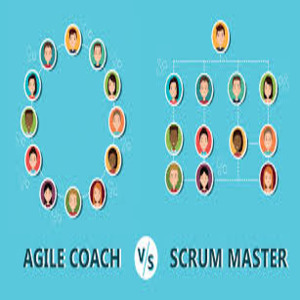
As Agile methodologies become the standard across industries, the need for strong leadership to guide teams through Agile practices has never been greater. Two essential roles that often emerge in Agile environments are the Scrum Master and the Agile Coach. While they share similar foundations and sometimes collaborate closely, their responsibilities, scope, and impact differ significantly.
This article breaks down the distinctions, overlapping areas, and complementary strengths of these two roles—helping organizations and professionals understand where each fits in an Agile journey.
1. Understanding the Roles
Who Is a Scrum Master?
A Scrum Master is a servant leader dedicated to a Scrum team. Their mission is to ensure that the team consistently follows Scrum principles and best practices. Scrum Masters help facilitate Scrum ceremonies, remove obstacles, foster collaboration, and support the team’s continuous improvement.
They primarily operate at the team level, focusing on one or more Scrum teams to enhance their productivity and agility.
Who Is an Agile Coach?
An Agile Coach works at a broader organizational level, often spanning multiple teams or departments. Their role is to promote Agile principles across the business, support various frameworks (Scrum, Kanban, SAFe, Lean), and lead cultural and mindset transformation.
Agile Coaches engage with teams, leadership, and departments, helping shape a sustainable Agile culture and guiding enterprise-wide change.
2. Scope of Responsibilities
Scrum Master Responsibilities:
-
Facilitate Scrum ceremonies (stand-ups, sprint planning, reviews, retrospectives)
-
Coach the team on Agile/Scrum practices
-
Shield the team from distractions and external interruptions
-
Remove impediments and roadblocks
-
Promote continuous improvement through retrospectives
-
Support the Product Owner in backlog refinement
-
Foster team self-organization and cross-functionality
Agile Coach Responsibilities:
-
Lead Agile adoption across teams and departments
-
Coach executives and managers on Agile mindset and change leadership
-
Facilitate Agile training and workshops
-
Guide framework selection and Agile scaling practices
-
Develop and execute Agile transformation strategies
-
Promote collaboration, transparency, and continuous learning
-
Ensure alignment across teams for organizational agility
3. Level of Influence
A core distinction lies in the reach of their influence:
-
Scrum Masters influence at the team level, directly guiding developers, testers, and Product Owners.
-
Agile Coaches operate at the organizational level, shaping strategy, structure, and culture by working with leaders and multiple teams.
4. Required Skills and Competencies
Scrum Master Skills:
-
Strong understanding of Scrum and Agile frameworks
-
Facilitation and conflict resolution
-
Emotional intelligence and servant leadership
-
Effective communication and coaching
-
Familiarity with the software development lifecycle (SDLC)
Agile Coach Skills:
-
Expertise in multiple Agile frameworks (e.g., Scrum, SAFe, Kanban, LeSS)
-
Organizational change and leadership coaching
-
Advanced facilitation and stakeholder engagement
-
Systems thinking and strategic planning
-
Agile maturity assessment and performance metrics
Agile Coaches often evolve from Scrum Master roles but require a broader strategic skill set and deeper experience.
5. Certification and Experience
Common Scrum Master Certifications:
-
Certified ScrumMaster (CSM) – Scrum Alliance
-
Professional Scrum Master (PSM) – Scrum.org
-
SAFe Scrum Master – Scaled Agile
Typically requires 1–3 years of Agile experience.
Common Agile Coach Certifications:
-
ICAgile Certified Expert in Agile Coaching (ICE-AC)
-
Certified Enterprise Coach (CEC) – Scrum Alliance
-
SAFe Program Consultant (SPC)
-
ICAgile Certified Professional in Agile Coaching (ICP-ACC)
Often requires 5+ years of Agile experience, including leadership or cross-team coaching.
6. Measuring Success
Scrum Master Success Indicators:
-
Improved team velocity and predictability
-
Higher quality deliverables with fewer defects
-
Strong team collaboration and morale
-
Efficient Scrum ceremonies
-
Increased self-organization within the team
Agile Coach Success Indicators:
-
Increased Agile maturity across the organization
-
Strong alignment and collaboration between teams
-
Improved employee engagement and cultural shift
-
Enhanced business agility and reduced time-to-market
-
Leadership adoption of Agile practices
7. Working Together: Collaboration, Not Competition
Scrum Masters and Agile Coaches often complement each other, especially in larger organizations:
-
Agile Coaches drive enterprise transformation, provide training, and shape Agile strategy.
-
Scrum Masters execute Agile practices at the team level and support tactical delivery.
For example, if a company adopts a new framework like SAFe, the Agile Coach might lead the rollout across departments, while Scrum Masters embed the framework within their individual teams.
8. Choosing the Right Role: For Organizations and Individuals
For Organizations:
-
Hire a Scrum Master to improve team-level performance and Scrum implementation.
-
Bring in an Agile Coach when pursuing Agile transformation or looking to scale Agile across the enterprise.
For Professionals:
-
Start as a Scrum Master to build foundational Agile experience with direct team coaching.
-
Grow into an Agile Coach by expanding your knowledge of organizational dynamics, leadership coaching, and scaling frameworks.
Conclusion
Both Scrum Masters and Agile Coaches are vital to Agile success—but they serve different purposes. While Scrum Masters focus on team-level execution, Agile Coaches operate at a strategic level to foster long-term, organization-wide agility.
Understanding these roles and their synergy allows organizations to structure their Agile journey effectively and helps individuals map out a clear and rewarding career path in Agile leadership.
You May Also Like
-
Aug 28, 2025
When professionals think of project management tools, names like Jira, Trello, Asana, or Wrike usually come up. However, there’s a...
-
Aug 18, 2025
AI & Automation in Project Management – The Future is Now! The project management landscape is undergoing a massive transformation....

-
Aug 8, 2025
The Hidden Challenge: What to Do When a Critical Project Resource Leaves? Every successful project relies on key contributors—those professionals...

-
Aug 7, 2025
When most people think of project management tools, they imagine platforms like Trello, Asana, or Microsoft Project. However, did you...
Sign up to receive our latest updates
Company
Support
Service Offerings
Special Offers
Get in touch
India
Call us directly?
+91-984-459-1589
Address
Learnerskart Solutions Pvt Ltd
4th floor, No: 207/189, 9th Main Rd, 6th Sector,
HSR Layout, Bengaluru, Karnataka 560102
info@learnerskart.com
USA
Call us directly?
+1 (307)-998-3816
Address
Learnerskart Americas LLC
30 N Gould St Ste R
Sheridan, WY 82801
info@learnerskart.com
Quick Contact
Trending Categories
Disclaimer
“PMI®”, “PMBOK®”, “PMP®”, “CAPM®” and “PMI-ACP®” are registered marks of the Project Management Institute, Inc.
ITIL® and PRINCE2® are registered trade marks of AXELOS Limited, used under permission of AXELOS Limited. All rights reserved.
“CSM”, “CST” are Registered Trade Marks of The Scrum Alliance, USA.
