PMBOK 7 vs PMBOK 8 Comparison: What’s New in the Latest PMI Guide | Learnerskart
-
November 25, 2025
The Project Management Body of Knowledge (PMBOK® Guide) continues to evolve as the profession advances. With the release of PMBOK 8, PMI has introduced a more structured, practical, and process-aligned guide—bringing back many elements professionals loved while keeping the modern, principle-driven philosophy of PMBOK 7.
If you’re preparing for the PMP exam, managing projects, or updating your organizational standards, understanding the key differences between PMBOK 7 and PMBOK 8 is essential.
🌟 Why the Shift From PMBOK 7 to PMBOK 8?
PMBOK 7 focused on principles, performance domains, and value delivery. However, many practitioners and organizations wanted:
-
More processes
-
Clearer guidance
-
Actionable steps
-
Stronger alignment with PMP exam content
-
Better integration of agile, hybrid, and predictive models
PMBOK 8 is PMI’s answer—bringing back structure without losing modern flexibility.
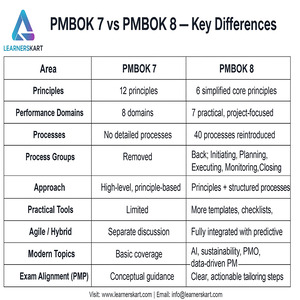
🔍 PMBOK 7 vs PMBOK 8: Key Differences (Simplified)
| Area | PMBOK 7 | PMBOK 8 |
|---|---|---|
| Principles | 12 principles | 6 simpler, refined principles |
| Performance Domains | 8 domains | 7 practical domains |
| Processes | No detailed processes | 40 processes reintroduced |
| Process Groups | Removed | Back: Initiating → Planning → Executing → Monitoring → Closing |
| Approach | High-level, principle-based | Principles + structured process-based approach |
| Templates & Tools | Limited | Expanded tools, checklists, templates |
| Agile / Hybrid | Discussed separately | Fully integrated with predictive models |
| Modern Topics | High-level mention | AI, sustainability, PMO maturity, data-driven PM |
| PMP Exam Alignment | Indirect link | Strong alignment with EPC (People–Process–Business) |
| Tailoring Guidance | Conceptual | Step-by-step practical tailoring |
📘 1. Principles: From 12 → 6 Core Principles
PMBOK 7 introduced 12 broad principles.
PMBOK 8 simplifies these into 6 core, universal principles, making the guide easier to understand and apply across industries.
This supports faster training, clearer onboarding, and simpler organizational alignment.
📘 2. Domains: From 8 → 7 Performance Domains
PMBOK 7 defined 8 performance domains such as stakeholder management, team, and planning.
PMBOK 8 reorganizes this into 7 practical domains, aligning closely with real-world project delivery and modern expectations.
The domains now support actionable planning, execution, and governance.
📘 3. Processes Return: The Biggest Change in PMBOK 8
One of the major criticisms of PMBOK 7 was the removal of detailed processes.
PMBOK 8 brings back:
-
~40 standard processes
-
Clear inputs, tools, and outputs
-
Predictive, agile, and hybrid integration
-
Real-world examples
This aligns the guide much more closely with how organizations actually execute projects.
📘 4. Process Groups Reintroduced
After disappearing in PMBOK 7, process groups are back:
-
Initiating
-
Planning
-
Executing
-
Monitoring & Controlling
-
Closing
This ensures consistency with earlier editions and industry standards.
📘 5. Better Integration of Agile + Hybrid
While PMBOK 7 discussed agile and hybrid separately, PMBOK 8 fully integrates them into processes, tools, tailoring, and delivery models.
This helps project managers understand:
-
When to use agile
-
When hybrid is better
-
How predictive and agile coexist in real projects
📘 6. Modern Topics Added in PMBOK 8
PMBOK 8 includes new and updated topics:
-
AI in project management
-
Sustainability & ESG-focused delivery
-
Data-driven decision-making
-
Project Management Office (PMO) evolution
-
Business agility
-
Digital transformation impacts
These align the guide with current global trends.
📘 7. Tailoring: More Actionable and Practical
PMBOK 7 discussed tailoring as a concept.
PMBOK 8 gives:
-
Step-by-step tailoring approach
-
Tailoring considerations for agile, hybrid, and predictive
-
Tools and templates that support tailoring
-
Role-based tailoring guidance
This helps project managers adapt processes based on project size, industry, and complexity.
📘 8. Stronger Alignment With the PMP Exam
The PMP exam content outline (ECO) focuses on:
-
People
-
Process
-
Business Environment
PMBOK 8 aligns more closely with this structure, ensuring professionals preparing for the PMP exam have more clarity and consistency.
📝 Conclusion: PMBOK 8 Brings Structure + Modern Relevance
PMBOK 8 is essentially a balanced evolution—combining the clarity of earlier editions with the modern thinking of PMBOK 7. It offers:
-
More structure
-
Clear processes
-
Better examples
-
Stronger exam alignment
-
Practical guidance for today’s dynamic, tech-driven environment
If you’re preparing for PMP or managing complex projects, PMBOK 8 gives you the tools you need to stay relevant and effective.
📣 Want to Master PMBOK 8 and Clear PMP on the First Attempt?
LearnersKart offers globally trusted PMP training with:
✔ 95% success rate
✔ Updated PMBOK 8–aligned content
✔ 2000+ practice questions
✔ Mock exams & exam strategy
✔ Instructor-led classes
🌐 Visit: www.learnerskart.com | 📧 Email: info@learnerskart.com
✔️ Follow us for more project management tips & career insights! https://lnkd.in/gYB4Dw4K
Tags:
You May Also Like

-
Dec 24, 2025
The PMBOK® Guide (Project Management Body of Knowledge) published by the Project Management Institute (PMI®) is the global standard for...
-
Dec 23, 2025
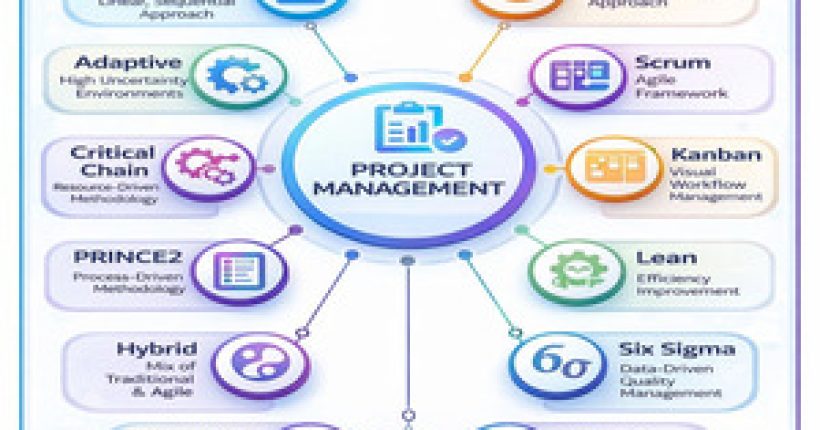
Project management is not a one-size-fits-all discipline. Different projects require different approaches depending on scope, complexity, uncertainty, and stakeholder expectations....
-
Dec 22, 2025
Scope creep is one of the most common reasons projects fail—even when teams are skilled and plans are well prepared....
-
Dec 19, 2025
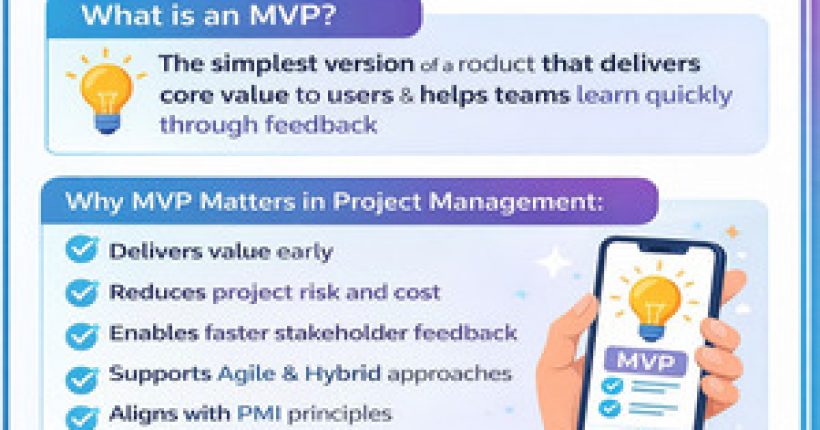
In today’s fast-changing business environment, delivering value quickly is more important than delivering everything at once. This is where MVP...
Sign up to receive our latest updates
Company
Support
Service Offerings
Special Offers
Get in touch
India
Call us directly?
+91-984-459-1589
Address
Learnerskart Solutions Pvt Ltd
4th floor, No: 207/189, 9th Main Rd, 6th Sector,
HSR Layout, Bengaluru, Karnataka 560102
info@learnerskart.com
USA
Call us directly?
+1 (307)-998-3816
Address
Learnerskart Americas LLC
30 N Gould St Ste R
Sheridan, WY 82801
info@learnerskart.com
Quick Contact
Trending Categories
Disclaimer
“PMI®”, “PMBOK®”, “PMP®”, “CAPM®” and “PMI-ACP®” are registered marks of the Project Management Institute, Inc.
ITIL® and PRINCE2® are registered trade marks of AXELOS Limited, used under permission of AXELOS Limited. All rights reserved.
“CSM”, “CST” are Registered Trade Marks of The Scrum Alliance, USA.
