Understanding the Differences Between DSDM and Scrum in Agile Development
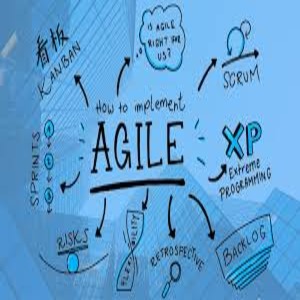
Agile development has significantly evolved since its introduction in 2001, offering flexible, iterative methods that address the limitations of traditional software development. Several frameworks now operate under the Agile umbrella, including Scrum, Kanban, Extreme Programming (XP), Scaled Agile, and the Dynamic Systems Development Method (DSDM). Each of these frameworks embodies Agile values but serves unique purposes and practices. This article compares two well-known Agile frameworks—DSDM and Scrum—highlighting their similarities and key differences.
What is DSDM?
Dynamic Systems Development Method (DSDM) originated in 1994 as an enhancement to Rapid Application Development (RAD). While it began as a software-specific methodology, DSDM has since evolved into a broader project management approach, even being reinterpreted by some industries as “Driving Strategy, Delivering More.”
DSDM is guided by eight core principles:
-
Focus on the business need
-
Deliver on time
-
Collaborate effectively
-
Never compromise quality
-
Build incrementally from firm foundations
-
Develop iteratively
-
Ensure clear and continuous communication
-
Demonstrate control
DSDM emphasizes strict governance, time and cost constraints, and continuous user involvement. It supports change and iteration without compromising project timelines or quality.
Key Elements of DSDM
-
Strong governance: A clear structure and assigned roles
-
Iterative development: Continuous improvement through repetition
-
Customer feedback-driven: Development responds to evolving needs
-
Fixed constraints: Quality, time, and cost are non-negotiable
-
Prioritization: Requirements are ranked as Must Have, Should Have, Could Have, and Won’t Have (MoSCoW method)
DSDM Project Lifecycle
-
Pre-Project Phase: Identifies viable projects and ensures commitment and funding
-
Project Lifecycle:
-
Feasibility & Business Studies: Establish goals and project understanding
-
Functional Model Iteration & Design-Build Iteration: Develop and refine the system
-
Implementation: Deliver the final product
-
-
Post-Project Phase: Assesses efficiency and guides ongoing maintenance and enhancements
Core DSDM Techniques
-
Timeboxing: Tasks are assigned to fixed durations (e.g., 2–6 weeks)
-
MoSCoW Prioritization: Categorizes requirements by necessity
-
Prototyping: Encourages early validation and discovery of obstacles
-
Continuous Testing: Validates features during every iteration
-
Modeling: Uses visual diagrams to clarify complex systems
What is Scrum?
Scrum is a lightweight, Agile framework focused on delivering products incrementally through short, iterative cycles called Sprints (typically lasting two to four weeks). Scrum emphasizes teamwork, accountability, and adaptability.
The Scrum Team includes:
-
Product Owner: Defines the vision and manages the Product Backlog
-
Scrum Master: Facilitates the process and removes obstacles
-
Developers: Build the product increment
Scrum fosters a culture of continuous improvement, self-organization, and regular feedback through structured events like Daily Standups, Sprint Planning, Sprint Reviews, and Sprint Retrospectives.
Scrum Workflow Overview
-
Sprint Planning: Team selects backlog items and plans the work
-
Daily Standups: Brief meetings to discuss progress and challenges
-
Sprint Review: The team demonstrates the completed increment and gathers feedback
-
Sprint Retrospective: Internal meeting to reflect and improve future Sprints
Scrum delivers value in increments that meet the Definition of Done (DoD)—a shared understanding of completion criteria.
DSDM vs. Scrum: Key Differences
While DSDM and Scrum share Agile principles and iterative development, they differ in structure and terminology:
| Aspect | DSDM | Scrum |
|---|---|---|
| Origins | Based on RAD (1994) | Created for software development (early 2000s) |
| Terminology | “Engineering activity,” “emerging solution” | “Development phase,” “potentially releasable increment” |
| Definition of Done | No fixed DoD; defined early in the project | DoD is specific and evaluated each Sprint |
| Phases | Pre-project, lifecycle, post-project | Sprint-based cycles |
| Prioritization | MoSCoW rules | Product Backlog with prioritized user stories |
| Governance | Strong governance and upfront planning | Lightweight and adaptive process |
| Flexibility | Balances structure with agility | Highly responsive to change |
Conclusion
Agile offers a variety of frameworks—each with strengths suited to different industries and organizational needs. Both DSDM and Scrum embrace iterative, collaborative development but differ in governance, planning, and delivery approaches. Understanding these differences is crucial for Agile professionals choosing a method aligned with their project goals and culture.
Organizations should assess each framework’s features and principles before implementation to ensure it supports long-term strategic objectives. Selecting the right Agile framework is key to unlocking the full potential of Agile methodologies.
For more guidance on Agile adoption, training, and framework implementation, consider joining LearnersKart today.
You May Also Like
-
Aug 28, 2025
When professionals think of project management tools, names like Jira, Trello, Asana, or Wrike usually come up. However, there’s a...
-
Aug 18, 2025
AI & Automation in Project Management – The Future is Now! The project management landscape is undergoing a massive transformation....

-
Aug 8, 2025
The Hidden Challenge: What to Do When a Critical Project Resource Leaves? Every successful project relies on key contributors—those professionals...

-
Aug 7, 2025
When most people think of project management tools, they imagine platforms like Trello, Asana, or Microsoft Project. However, did you...
Sign up to receive our latest updates
Company
Support
Service Offerings
Special Offers
Get in touch
India
Call us directly?
+91-984-459-1589
Address
Learnerskart Solutions Pvt Ltd
4th floor, No: 207/189, 9th Main Rd, 6th Sector,
HSR Layout, Bengaluru, Karnataka 560102
info@learnerskart.com
USA
Call us directly?
+1 (307)-998-3816
Address
Learnerskart Americas LLC
30 N Gould St Ste R
Sheridan, WY 82801
info@learnerskart.com
Quick Contact
Trending Categories
Disclaimer
“PMI®”, “PMBOK®”, “PMP®”, “CAPM®” and “PMI-ACP®” are registered marks of the Project Management Institute, Inc.
ITIL® and PRINCE2® are registered trade marks of AXELOS Limited, used under permission of AXELOS Limited. All rights reserved.
“CSM”, “CST” are Registered Trade Marks of The Scrum Alliance, USA.
